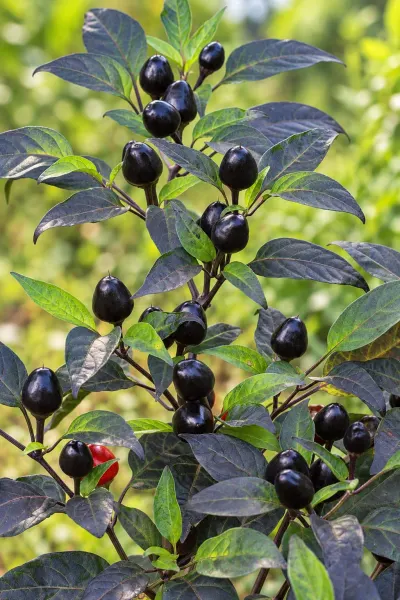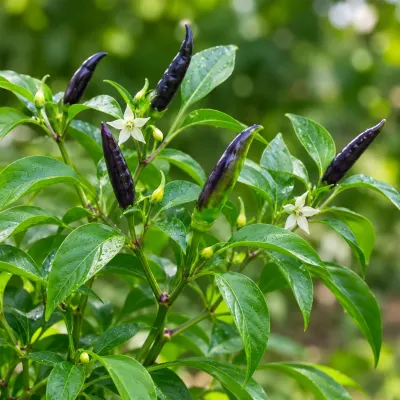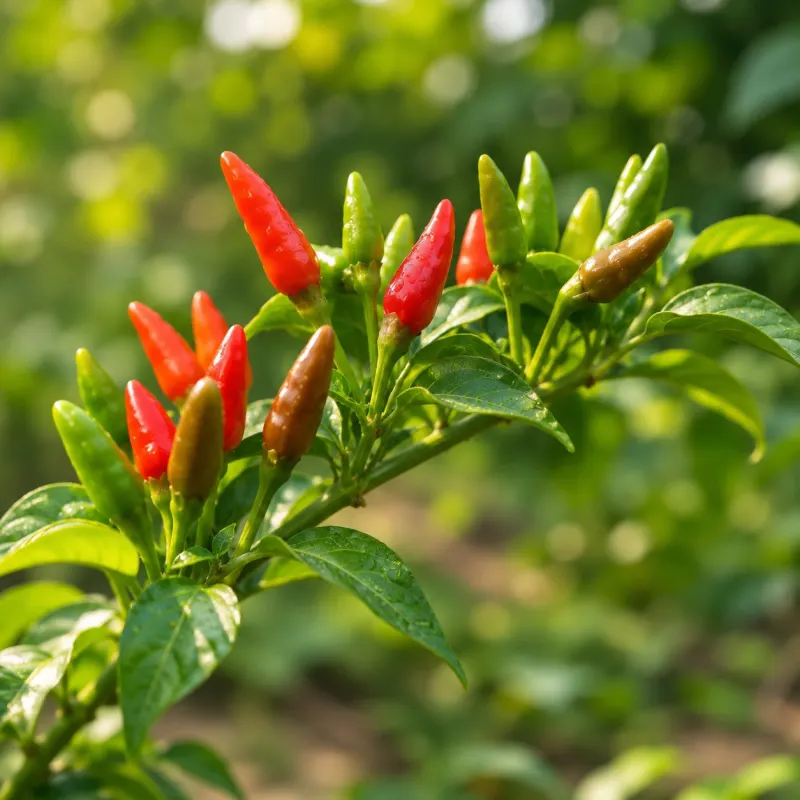
Gandhari chilli plant
₹549.00
Live Gandhari chilli: a fierce bird’s-eye chilli from Kanyakumari that keeps bearing for two to three years.
Capsicum frutescens
Gandhari menasinakayi / ಗಾಂಧಾರಿ ಮೆಣಸಿನಕಾಯಿ (Gandhari chilli, Golkonda chilli)
- Grow bag12 in wide x 18 in tall, 220 GSM HDPE
- Ships atEstablished in its Nabhi bag, roots at the olla
- Sunlight6+ hours direct sun
Grown to order — delivered in about 15 days
We start it when you order and hand it over once it is established and hardened off. That is what makes the olla work from day one: the roots have already grown down to it before it reaches you.
SKU MEN-GAN
Water it through the olla. That is the only instruction.
A buried terracotta olla releases water at exactly the rate the soil draws it, over a base of well-rotted wood that holds moisture through a hot week. You cannot overwater it and it will not dry out on you. The roots reach the olla before the plant leaves us, so it works from the day it arrives.
The Nabhi method: how these bags are built · What is an olla?
Details
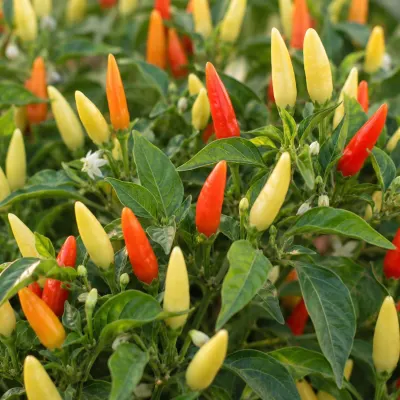
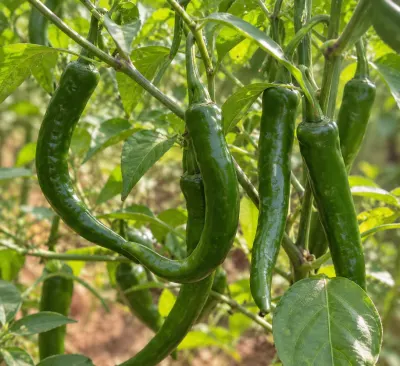
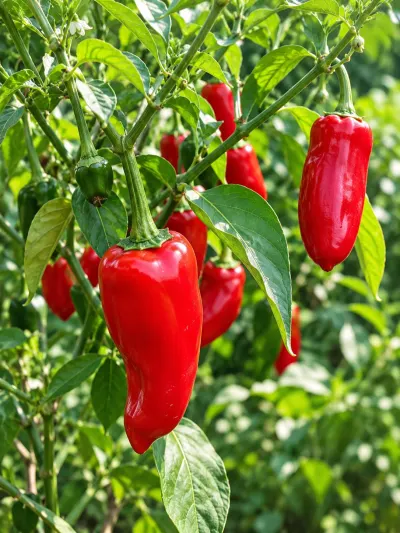
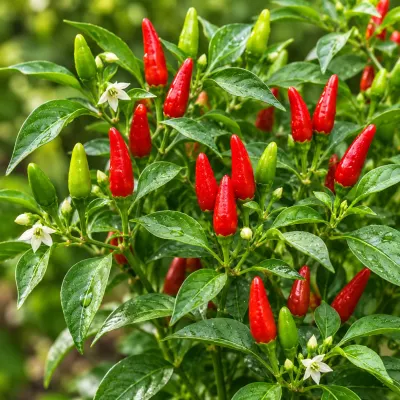
Gandhari, also called Golkonda chilli, is a small, fierce chilli of the wild bird’s-eye type (Capsicum frutescens). Tamil Nadu Agricultural University records it as a traditional variety of Vettuvanni village in Kanyakumari district. It is more pungent than most chillies, so much so that it never spread to the rest of Tamil Nadu. The small pods grow pointing upward, yellowish green at first and red when ripe. A little goes a long way in Indian cooking.
According to Sahaja Seeds, it is a branching plant that grows over four feet tall, shrugs off pests and diseases, and keeps producing for two to three years, so one bag gives you chillies for seasons, not months. Farmers in Kanyakumari even grind the ripe pods with garlic and neem oil into a spray against crop pests.
The leaves are food too. At home we add a few chilli leaves to any soppu (leafy vegetable) curry. In the Philippines they go into tinola, a ginger and chicken soup, and in Korea they are blanched and seasoned as a side dish. A study of fresh chilli leaves found them high in calcium (about 550 mg per 100 g), iron (6.9 mg), beta-carotene, which the body turns into vitamin A, and fibre, with much of the iron and beta-carotene surviving cooking. Pick young leaves from the tips and cook them rather than eating them raw.
Good for the bees around you. Chilli flowers self-pollinate, but bees visiting them improve fruit set: researchers at Nagaland University found more and healthier fruit on chilli plants that bees could reach. A plant on your balcony is a small, steady source of flowers for them.
Growing it on a Bengaluru terrace. Give it at least six hours of direct sun. It reaches over 1.2 m (4 ft). The olla buried in its Nabhi grow bag waters the roots as the soil dries, so on a hot terrace or balcony you top up the olla instead of watering every day.
Sources: Gandhari chilli, TNAU Agritech · Sahaja Seeds · Abilgos-Ramos et al., Silliman Journal, 2017 · Tinola with chilli leaves, The Skinny Pot · Stingless bees and chilli, The Week, 2025.
Specifications
| Botanical name | Capsicum frutescens |
|---|---|
| Grow bag | 12 in wide x 18 in tall, 220 GSM HDPE, filled, with olla |
| Ships at | Established in its Nabhi bag, roots at the olla |
| Pods | Small, pointing upward, yellowish green then red |
| Heat | Very hot |
| Mature height | Over 1.2 m (4 ft), branching |
| Productive life | 2 to 3 years |
| Sunlight | 6+ hours direct sun |
| Watch for | Few problems; Sahaja describes it as free from pests and diseases |
Questions
How hot is Gandhari chilli?
Very hot, hotter than most chillies. Use a small piece at a time.
How long will the plant keep bearing?
Two to three years, so one plant gives chillies for several seasons.
Do I need to water it?
Just keep the olla topped up. It releases water as the soil dries, so the plant can’t be overwatered.